Why Early Signs of Dementia Are So Often Missed—Even by Healthcare Professionals: My Conversation with All Home Care Matters
Updated: Apr 22
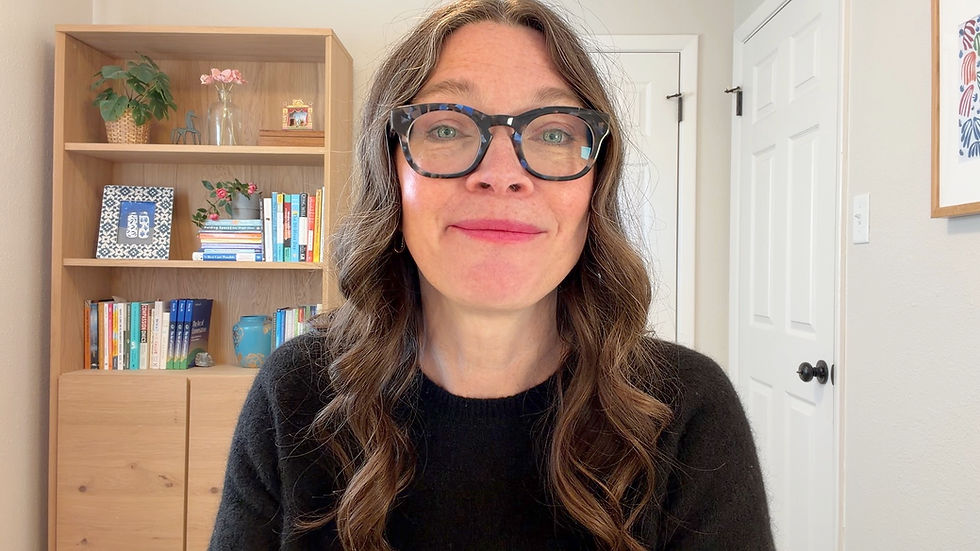
Recently, I had the opportunity to join the All Home Care Matters podcast to talk about what families are actually experiencing in the dementia journey.
There is one idea that explains so much of the confusion, frustration, and delay that families encounter:
Dementia does not just affect memory.
It breaks the traditional medical model.
In healthcare, we are trained to rely on the patient.
We expect the person in front of us to remember symptoms, describe changes, and advocate for themselves. The entire structure of a clinical visit depends on that exchange.
But dementia quietly removes those abilities.
The very cognitive functions that medicine relies on—memory, insight, accurate reporting—are the first things to go.
And so the system misses it.
Not because clinicians are not paying attention.
But because the model itself depends on something that is no longer intact.
This is why families so often know something is wrong long before anyone else does.
They see the subtle changes at home:
The repeated questions
The difficulty managing household tasks
The shifts in judgment and behavior
They are witnessing a pattern.
But when they bring those concerns into the medical system, they are often reassured.
“Everything looks fine.”
“It is just aging.”
“Let’s wait and see.”
And in that waiting, the gap widens.
What families are experiencing at home and what the system is able to detect begin to diverge.
By the time the diagnosis becomes clear, families have often been carrying the weight of this journey alone for years.
This is one of the most painful parts of dementia.
Not just the disease itself, but the absence of understanding.
Because what families need is not just a diagnosis.
They need a way to interpret what they are seeing.
They need to understand:
Why reasoning stops working
Why behaviors change
Why communication becomes so difficult
And most importantly, how to respond in a way that preserves dignity and reduces conflict.
When I teach families how to understand the dementia journey, I do not tell them where their loved one is.
I teach them how to recognize the pattern.
And almost without fail, there is a moment when a caregiver says:
“Oh. This is where we are.”
That moment is powerful.
Because it does not come from being told.
It comes from recognition.
It replaces confusion with clarity.
It replaces frustration with understanding.
And it allows caregivers to meet their loved one where they are, rather than asking them to function in ways their brain no longer supports.
This is where dementia care actually happens.
Not in the clinic.
But in the home.
Dementia may rob your loved one of their skills and abilities, but it will never rob them of their humanity.
And when care is aligned with that truth, the entire journey changes.
You can watch my full conversation on the All Home Care Matters podcast above, or access it directly on YouTube here:
Amy Shaw, PA-C, is a dementia care clinician, educator, author, and founder of Better Dementia™, a national education platform for caregivers. She is the author of The Arc of Conversation: A How-to Guide for Goals of Care Conversations (Springer, 2025) and provides self-paced dementia education and one-to-one family support. She helps families understand the what, when, and why of dementia so they can master the how of caregiving.